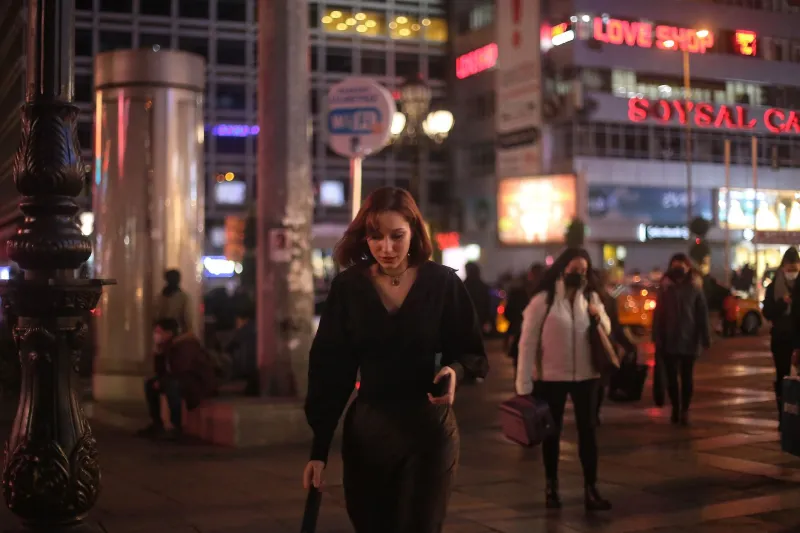
Logged Off and Leveled Up: How Going Dark Online Became the Ultimate Power Move

There's a certain kind of person you've probably noticed. They show up at the right events, they're always impeccably dressed, and when you check their Instagram — nothing. Maybe a post from three weeks ago. Maybe less. And yet somehow, everyone's talking about them.
Welcome to the era of strategic absence, where the most coveted people in any room aren't the ones flooding your feed. They're the ones you have to actually seek out.
Scarcity Is the New Clout
Basic economics will tell you that scarcity drives value. Luxury brands have known this forever — you can't walk into a Hermès store and walk out with a Birkin the same day, and that's entirely by design. The same principle is quietly reshaping how the socially elite manage their digital footprints.
When you're everywhere online, you become wallpaper. Familiar, yes. Interesting? Not so much. But when you pull back — when your Stories go quiet and your grid stops updating — you create a vacuum. And people, by nature, rush to fill vacuums with curiosity, speculation, and attention.
Fashion insiders and industry tastemakers have caught onto this in a big way. The constant-posting era, with its thirst traps and sponsored smoothie content, is starting to feel very 2019. What's replacing it is something more deliberate: a curated silence that signals you have a life too full and too fabulous to document in real time.
The Mystique Economy
Think about the cultural figures who maintain the most powerful auras. They're rarely the ones oversharing on TikTok. There's a reason certain celebrities and creative directors feel larger than life — they control the narrative by controlling the supply of themselves.
This isn't accidental. It's a conscious editorial choice about personal brand, and it trickles down from the upper echelons of culture into the style-conscious social circles of major US cities. In New York, LA, Miami, and Chicago, the people setting the tone at the best private events aren't the ones you can find online 24/7. They're the ones whose appearances — digital or otherwise — feel like events in themselves.
Call it the mystique economy. Your online presence is currency, and like any currency, flooding the market devalues it. When you go dark, even temporarily, you're essentially creating demand.
Digital Detox as Status Symbol
Here's where it gets genuinely interesting: in high-society circles, the ability to disconnect has become a marker of privilege in itself. Think about it — who can afford to go offline? Not someone anxiously refreshing their notifications for validation. Not someone whose self-worth is tied to their engagement rate.
The person who can vanish for two weeks and come back unbothered? That's someone operating from a position of confidence, security, and — let's be honest — a little bit of power.
This is why luxury wellness retreats that enforce phone-free policies have exploded in popularity among the fashion and entertainment crowd. Places like Canyon Ranch or high-end silent retreats in upstate New York aren't just selling relaxation. They're selling the ultimate status symbol: the freedom to be unreachable. And their clientele wears that unreachability like a badge.
When you return from one of these experiences and casually mention you were "off the grid for a bit," you're communicating something very specific about your lifestyle — and your audience hears it loud and clear.
Filtering Your Inner Circle Through Silence
There's another dimension to strategic absence that doesn't get talked about enough: it's one of the most effective ways to find out who actually cares.
When you go quiet online, the people who reach out directly — who text, who call, who make actual effort — those are your real ones. The followers who were only engaging with your content? They'll drift. And honestly? That's the point. It's a natural, low-drama way to filter your circle down to the people who are invested in you, not just your content.
For anyone serious about building a social scene that's genuinely high-quality (rather than just high in numbers), this kind of filtering is invaluable. It separates the audience from the inner circle, and in Club Fab's world, the inner circle is everything.
How to Disappear Well
Not all absences are created equal, though. There's a difference between going dark with intention and simply falling off because life got chaotic. The former is a power move. The latter just looks like you couldn't keep up.
So how do you disappear strategically?
Go out with a memorable moment. Your last post before a hiatus matters. Make it something visually striking or intriguingly vague — something that gives people something to think about while you're gone. A cryptic caption, an enviable location, an outfit that stops the scroll. Let that be the last image they have of you for a while.
Set a loose internal timeline. Whether it's two weeks or two months, have a rough sense of when you'll resurface. This keeps the absence feeling intentional rather than aimless.
Stay active in the real world. The whole point of going offline is to invest that energy elsewhere — into actual experiences, relationships, and creative projects. If you're just sitting at home scrolling anyway, you're doing it wrong.
Come back with something worth saying. Your return should feel like an event. Not necessarily a grand announcement, but a post or a presence that reminds people why they were watching in the first place. Quality over quantity, always.
The Long Game
Here's the truth that the content-at-all-costs crowd doesn't want to hear: personal brand isn't built by volume. It's built by impression. And impressions are shaped by what people remember, what they wonder about, and what they feel when you finally show up.
The most magnetic people in any social ecosystem — whether that's the fashion week circuit, the LA creative scene, or the tightly-knit world of New York nightlife — understand that their value isn't measured in posts per week. It's measured in the quality of attention they command when they do choose to show up.
Going dark, done right, isn't a retreat. It's a recalibration. It's choosing depth over noise, real-world richness over digital performance, and long-term allure over short-term engagement spikes.
In a culture that rewards constant visibility, opting out — even briefly, even partially — is genuinely radical. And radical, in the right circles, is always in style.
So the next time you feel the pressure to post just to stay "relevant," consider the alternative. Log off. Live fully. Let them wonder.
Trust us — the wondering is the whole point.