Twenty Pieces, Infinite Outfits: The Case for Owning Less and Wearing Better
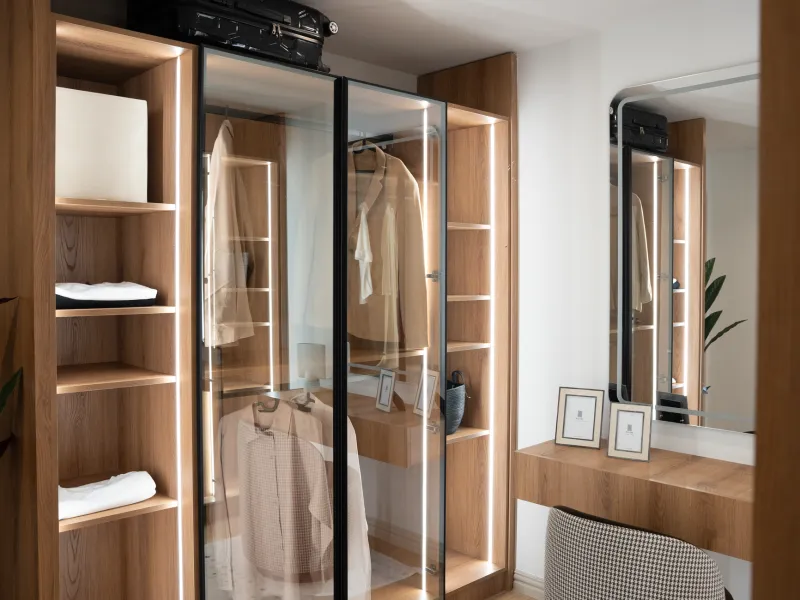
There's a particular kind of confidence that comes from opening your closet and knowing — without hesitation — exactly what you're going to wear. No frantic shuffling through impulse buys with the tags still on. No guilt-spiral over the sequined top you wore once at a bachelorette party in Nashville. Just clean, intentional pieces that actually reflect who you are right now.
This is the wardrobe philosophy quietly taking over the fashion-forward set, and it has nothing to do with minimalism as a trend. It's something more personal — and honestly, more powerful.
The Myth of the Full Closet
American closets are, statistically, overstuffed. The average U.S. consumer owns somewhere around 100 pieces of clothing, yet regularly wears only about 20 percent of them. Do the math. That's a lot of money hanging unused, a lot of decision fatigue every morning, and a whole lot of style noise drowning out the signal.
Fashion editors and personal stylists have known this secret for years. The people who always look put together — the ones whose outfits seem effortless and intentional — aren't working with more. They're working with better. They've done the hard edit, and they've never looked back.
"When I work with clients who feel like they have nothing to wear, their closets are usually packed," says one New York-based personal stylist who works with entertainment industry clients. "The problem isn't scarcity. It's clarity. They don't know what they actually own because there's too much of it."
What a Real Wardrobe Audit Looks Like
A closet audit isn't a weekend spring cleaning project where you toss a few things into a donation bag and call it done. Done right, it's a deliberate reckoning — part self-reflection, part style strategy.
Start by pulling everything out. Yes, everything. Lay it on your bed, your floor, wherever. The visual overwhelm is the point. Seeing the full volume of what you've accumulated forces an honest conversation with yourself about what you've actually been buying versus what you actually wear.
From there, the edit happens in rounds:
Round one is the obvious cut — anything damaged, anything that genuinely doesn't fit, anything you haven't touched in over a year. These go without negotiation.
Round two is the harder conversation. This is where you confront the aspirational purchases: the blazer you bought for the person you thought you'd become, the trendy piece that felt urgent at the time but looks dated now, the dress that photographs beautifully but makes you uncomfortable all night. If you wouldn't reach for it first, it probably doesn't belong.
Round three is where the real magic happens. What's left should be a collection of pieces you genuinely love, that fit your current life, and that work together. If you can't style something at least three different ways with what remains, reconsider its place in the rotation.
The Psychology of Constraint
Here's the counterintuitive truth that stylists and fashion psychologists keep circling back to: having fewer options actually makes you more creative, not less.
When your choices are limited, your brain stops defaulting to the easy, familiar combo and starts problem-solving. You start seeing your pieces differently — as building blocks rather than standalone items. A structured blazer stops being "the work blazer" and starts being the thing that transforms a slip dress into a dinner look or makes a simple tee feel intentional.
This is why so many of the most consistently stylish people — from fashion week regulars to the editors you follow on Instagram — are quietly rotating the same core pieces in new configurations. It's not laziness. It's mastery.
There's also a psychological relief that comes with a curated closet that's hard to overstate. Decision fatigue is real, and it starts before most of us have had our first cup of coffee. Eliminating low-stakes choices — like what to wear — frees up mental energy for the things that actually matter. It's the same reason certain high-achieving people are known for wearing nearly identical outfits every day. The uniform isn't boring. It's a power move.
Investing Up, Not Out
The curated closet philosophy naturally shifts your spending habits, and that's the part that really stacks up over time. Instead of buying five mediocre pieces at a mid-range retailer, you're redirecting that same budget toward one genuinely great one. A well-constructed coat. A perfectly fitting pair of trousers. Shoes that look better with age.
Quality pieces earn their keep in a way that trend-driven fast fashion simply doesn't. They hold their shape, they photograph well, they work across seasons, and they quietly communicate something about the person wearing them — that they know what they like, and they don't need to prove it with volume.
Personal stylists often recommend starting with what they call "anchor pieces" — the foundational items that everything else orbits around. For most people, that's a neutral palette of well-cut basics: a great white button-down, a pair of dark straight-leg denim, a blazer that fits like it was made for you, a cashmere or quality knit, versatile footwear in two or three tones. From there, you add personality through texture, proportion, and a few signature pieces that feel distinctly you.
The Rotation Is the Point
One of the most liberating realizations that comes out of a real wardrobe audit is this: you don't need an outfit for every occasion. You need a wardrobe that adapts.
The goal isn't to have something different to wear every day of the month. It's to have pieces that recombine in ways that feel fresh and intentional each time. The same silk cami that goes under a blazer for a dinner meeting gets tucked into wide-leg trousers for a rooftop happy hour or layered under a leather jacket for a late night out. That's the kind of versatility that makes a small closet feel like a full wardrobe.
And honestly? There's something quietly luxurious about a closet that doesn't overwhelm you. It signals that you've done the work — on your style, on your self-knowledge, on your willingness to let go of what no longer serves you. In a culture that constantly pushes more, choosing less on purpose is its own kind of status.
The most stylish rooms at any party aren't the ones wearing the most. They're the ones wearing exactly the right thing — and looking like they didn't even have to think about it.