The Unspoken Language: How the Most Magnetic People in Any Room Say Everything Without Opening Their Mouths
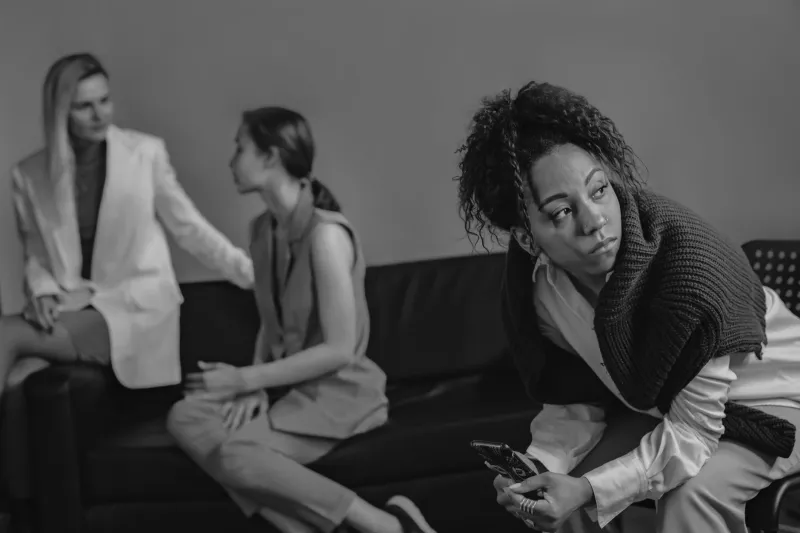
You've been at the party for twenty minutes and you've already clocked them. They're not holding court or dominating the conversation. They're not the loudest laugh or the most elaborate outfit. But somehow, everyone in the room is subtly oriented toward them — the way sunflowers track light without appearing to try.
What they have is not charisma in the traditional, performative sense. It's something more precise. It's body language fluency, and it is absolutely a learnable skill.
Why Words Are Actually the Last Thing People Remember
Research consistently shows that the majority of human communication is nonverbal. UCLA professor Albert Mehrabian's foundational studies on liking and communication suggested that tone, expression, and body language carry far more weight than the actual content of what's said — particularly in social and emotional contexts.
In practice, this means that what you say is often less important than how you're positioned when you say it, what your hands are doing, where your eyes go, and how much space you occupy. The most socially fluent people understand this intuitively. The rest of us can learn it deliberately.
This isn't about manipulation. It's about alignment — making sure the signal your body sends matches the presence you want to project.
The Arrival: First Impressions Are Made in Three Seconds
Before you've said a word at any event, gathering, or meeting, you've already communicated volumes. Research on thin-slicing — the brain's ability to make rapid judgments from minimal information — suggests that people form initial impressions within seconds of seeing you walk into a room.
So what does a powerful arrival look like?
Pause before you enter. Sounds simple. Almost nobody does it. Taking one beat at the threshold of any room — a party, a conference, a dinner — resets your posture, your expression, and your energy. It signals to your nervous system that you're choosing to enter, not stumbling in.
Lead with your chest, not your chin. When people are anxious or self-conscious, they tend to lead with their head — chin forward, shoulders rounded, as if they're apologizing for taking up space. The inverse — chest open, shoulders back, chin level — reads as ease. Not arrogance. Ease. There is a meaningful difference.
Slow your scan. When you enter a new space, resist the urge to rapidly scan the room for familiar faces. Instead, take a slow, deliberate look around. It reads as comfort and confidence. Fast, darting eye movement reads as anxiety, even if you're just looking for your friend.
The Art of Genuine Stillness
One of the most underrated signals of social power is the ability to be still. Not frozen — still. Composed. Not fidgeting with your phone, not shifting your weight, not touching your face every thirty seconds.
Fidgeting is a self-soothing behavior, and while it's completely human and understandable, it broadcasts discomfort to everyone around you. The people who command rooms without effort are often remarkable simply for how settled they appear.
Practice this: the next time you're in a social setting, notice where your hands are. If they're moving constantly — adjusting your drink, touching your hair, playing with your jewelry — consciously bring them to rest. Hold your glass at your side. Let your arms hang naturally. The stillness you feel inside when you stop fidgeting is the same ease that others will read from the outside.
Eye Contact: The Difference Between Intensity and Connection
Eye contact is where most people either overdo it or completely check out, and both extremes undermine presence.
The goal isn't sustained, unblinking eye contact — that reads as intensity or aggression, not warmth. The goal is attentive eye contact: the kind that says I am genuinely here, listening to you, and not scanning the room for someone more interesting.
A useful framework: maintain eye contact for roughly 60-70% of a conversation, breaking it naturally (not by looking at your phone) when you're thinking or speaking. When you do look away, look up or to the side — not down. Looking down reads as submission or discomfort. Looking sideways reads as thought. The difference is subtle and the effect is significant.
The most magnetic conversationalists also deploy what might be called the delayed blink — a slightly longer blink that communicates absorption. It's the physical equivalent of "tell me more," and it works.
Spatial Awareness: How You Occupy a Room
Magnetic people are comfortable taking up space. Not in an aggressive or territorial way — in a grounded way. They don't shrink into corners. They don't hover at the edges of conversations. They plant themselves, open their posture, and let the space around them breathe.
Here's the practical version:
- Stand with your feet hip-width apart. It's the posture of someone who isn't going anywhere. Crossed ankles or feet pressed together signal uncertainty.
- Don't mirror closed body language. If someone crosses their arms at you, resist the urge to mirror them. Stay open. It subtly shifts the dynamic.
- Face people fully when they're speaking. Not a half-turn. Full body orientation. It's one of the most generous things you can do in a conversation, and people feel it immediately.
Strategic Silence: The Most Underused Power Tool in Any Room
The most compelling people are not the ones filling every silence. They're the ones who are comfortable letting silence exist.
In American social culture especially, silence tends to make people nervous, which means most of us rush to fill it. The person who doesn't — who can sit in a beat of quiet without scrambling to paper over it — reads as remarkably self-possessed.
This applies in conversation too. When someone says something worth considering, let it land before you respond. The pause communicates that you actually heard them. It gives weight to your response. And it signals that you're not performing conversation — you're actually having one.
That distinction, felt rather than heard, is the whole game.
The Takeaway: Presence Is a Practice
None of this is about becoming someone you're not. It's about removing the noise — the fidgeting, the darting eyes, the rushed words — that prevents the best version of you from coming through clearly.
The most magnetic people in any room are not putting on a show. They've simply gotten comfortable enough in their own presence that everyone else gets comfortable too. That ease is contagious. And it starts, every time, with you deciding how you're going to walk through the door.