Same Outfit, Different Day: Why the Most Powerful People in the Room Stopped Trying to Impress You
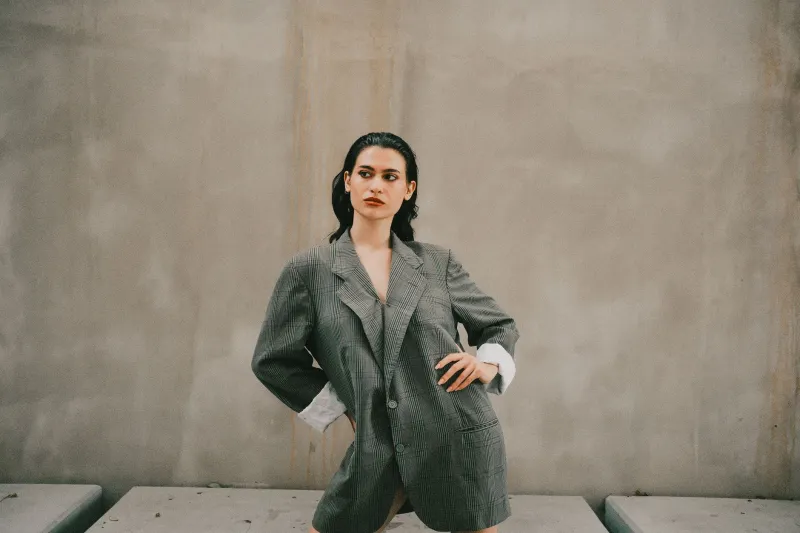
Let's talk about the most quietly rebellious thing happening in fashion right now. It's not a new silhouette or a micro-trend cycling through TikTok. It's the deliberate, almost aggressive act of wearing the same thing — over and over — and not apologizing for it even slightly.
Welcome to the personal uniform era. Population: people who have genuinely figured it out.
The Myth of the Capsule Wardrobe (And What Actually Works Instead)
You've heard the capsule wardrobe pitch approximately a thousand times. Thirty pieces. Neutral colors. Mix and match. It sounds elegant in theory and looks chaotic in practice because it still requires daily decisions. Which thirty pieces? In what combination? For what context?
The personal uniform is a different animal entirely. It's not about having fewer clothes. It's about having one answer. A signature. A visual shorthand for who you are that you've thought about exactly once and now execute effortlessly every single day.
Mark Zuckerberg's gray t-shirt. Steve Jobs' black turtleneck. Karl Lagerfeld's white ponytail, dark glasses, and high-collared jacket. These aren't laziness. They are, in the most literal sense, personal brands made wearable.
"What people misunderstand about the uniform is that it requires more confidence, not less," says one New York-based creative director who has worn a variation of the same look — wide-leg trousers, a crisp white shirt, and a single bold accessory — for the better part of a decade. "Anyone can follow a trend. It takes a real point of view to say: this is me, every day, take it or leave it."
Decision Fatigue Is Real, and Your Wardrobe Is Making It Worse
There's actual science behind why the most high-performing people in the world are opting out of daily style decisions. Barack Obama famously limited his wardrobe to gray or blue suits during his presidency specifically to reduce what psychologists call decision fatigue — the mental depletion that comes from making too many choices in sequence.
By the time you've deliberated over what to wear, you've already spent cognitive currency you can't get back. For creatives, executives, and anyone whose work demands peak mental clarity, that's a real cost.
But here's the Club Fab angle that the productivity blogs always miss: the personal uniform isn't just efficient. It's powerful. The moment you stop trying to dress for other people's approval is the moment your style becomes genuinely interesting.
The Five Archetypes of the Modern Uniform
Not all uniforms look the same, and that's exactly the point. Here's how the most stylish adopters are doing it:
The Minimalist Architect Think Jil Sander devotees. Monochromatic from head to toe. Impeccable tailoring. Zero ornamentation. This uniform says: I am so confident in my proportions that I don't need color to distract you. It works in every professional setting and reads as expensive even when it isn't.
The Off-Duty Creative The art world's favorite: vintage Levi's, a perfectly broken-in leather jacket, and one rotating hero piece — a ring, a scarf, a shoe that does the heavy lifting. Casual by design, intentional in execution.
The Power Neutral The CEO uniform. Tailored trousers in a consistent cut, a quality knit or structured top, clean sneakers or loafers. It's boardroom-ready but never stiff. Think Kris Jenner's blazer-forward aesthetic — always put-together, never trying too hard.
The Statement Repeater This person has found their signature piece — a specific color, a particular silhouette, a recurring motif — and they ride it hard. You see them in head-to-toe cobalt and you immediately know who they are before they've said a word. This is personal branding at its most sophisticated.
The Luxe Uniform For those whose context demands a certain polish: one exceptional quality fabric, one precise cut, one consistent palette. It's the approach of the fashion insider who knows exactly which details matter and refuses to compromise on any of them.
How Repetition Builds Recognition (And Why That's the Point)
Here's the thing about wearing the same thing all the time that nobody tells you: people start to recognize you for it. Not in a boring way — in a brand way.
Think about the most stylish people you know personally. Chances are, you can describe their look in one sentence. That's not a limitation. That's a superpower. Visual consistency makes you memorable in a way that trend-chasing never will, because trends belong to everyone. A personal uniform belongs only to you.
This is why fashion's most enduring icons — from Diane von Furstenberg in her wrap dresses to Pharrell in his trucker hats — are remembered as themselves rather than as people who wore interesting clothes. The clothes became an extension of identity, not a performance for external validation.
Finding Your Uniform: The Edit
Ready to try it? Start with honest answers to three questions:
-
What do you reach for when you're running late and just need to look good? That's your baseline. That's your body and your instincts telling you what actually works.
-
What do you wear when you feel the most like yourself? Not the most impressive. Not the most on-trend. The most you. That's your foundation.
-
What would you wear if you knew you'd be photographed unexpectedly? That's your standard.
The overlap between those three answers is your uniform. Invest in it. Refine it. Repeat it without apology.
Because the most powerful thing you can do with your style is stop treating it like a daily audition and start treating it like a signature. Signatures don't change. That's what makes them mean something.